Food and Fantasy in Japanese Art

Can you taste an image?

To begin to talk about the depiction of food in Japanese art, I will start (seemingly tangentially) with a discussion of the development of the printing industry in the Edo period (1603-1868). The growth of printing  did not rely on technological developments, but on the rise of an urban consumer market to financially support it (Rath, 2010). Indeed, Japanese publishers continued to use the traditional method of woodblocks for printing. 

As early as 1640 there were as many as hundred bookstores in Kyoto and it is estimated that Japan published an average of three thousand books a year. These books could cost the equivalent of a few meals up to the equivalent of a month’s worth of food. However, customers who could not afford to buy books could rent them from rental libraries, making them widely financially accessible.
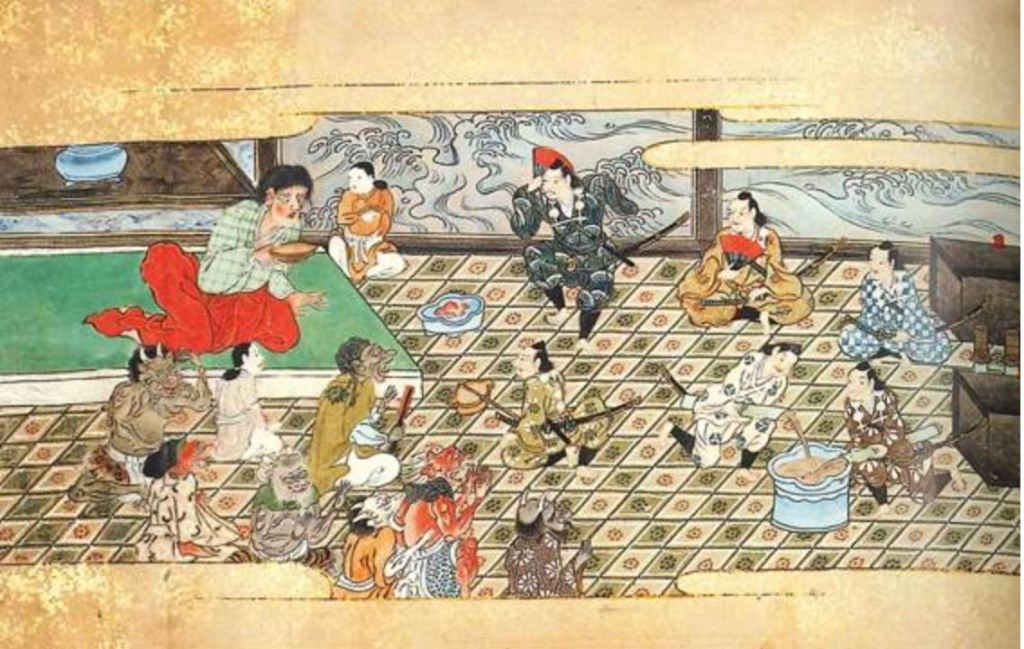
Depiction of an early Edo period Shogun banquet (The Tokugawa Art Museum, 2008)

Some bookstores specialised in culinary books- collections of recipes and menus. Culinary books published during the early Edo period detailed elite styles of banqueting, allowing common people to learn about elite cuisine. Elite customs like shikisankon even became popular parts of lower-class weddings.

Although these culinary books allowed a wider appreciation of elite cuisine, there were heavy restrictions controlling accessibility to these forms of culture. The Tokugawa bakufu subdivided sections of society which reflected geographical differences. Laws enforced upon these categories specified aspects of daily life such as proper clothing, the size and location of one’s home, and mundane objects. Food and dining were also regulated and commoners could not legally serve special recipes reserved for Samurai or consume many game birds used in elite banquets.

Many of the banquets and menus detailed in culinary books could only be legally consumed by senior members of the bakufu and aristocrats. The cost of the ingredients also limited their audience. However, the publication of these culinary books exceeded the small number of people who could consume the foods described. Thus, it is difficult to draw a line between the readers who read for practicality and those who read for amusement.

So why did the lower class read about these foods they had no chance of ever preparing or consuming?

It is because they could fantasise about tasting swan sashimi with miso dressing, or attending a banquet fit for a shogun. The inaccessibility of these foods made them even more captivating. The publication of culinary texts allowed people to think about food as an imaginative, artistic, and intellectual practice. Food in Japan increasingly became a way to signify ideas, emotions, and sociality.

Evidently vivid descriptions and depictions of food through art and literature have formed a traditional part of Japanese entertainment. This may have provided a basis for the distinct way that food is portrayed in art in Japan today. I will explore this using anime and more specifically Studio Ghibli films as a case study.

Studio Ghibli films are a multi-sensory experience guiding you through stories of forest spirits, sassy talking cats, dragons, steampunk machines, vengeful gods, and magic. Their films are also famous for making their viewers hungry through their highly intimate portrayals of cooking and food (Cafolla, 2017). The characters in fantastical other-dimensions are fed on a wide variety of delicious-looking food ranging from the mundane such as bento boxes, onigiri, sandwiches and pasta, to the extraordinary such as lavish banquets.

“Anime may depict fictional worlds, but I nonetheless believe that at its core it must have a certain realism. Even if the world depicted is a lie, the trick is to make it seem as real as possible. Stated another way, the animator must fabricate a lie that seems so real, viewers will think the world depicted might possible exist.”

Hayao Miyazaki, co-founder of the Studio Ghibli animation studio (Miyazaki, 2014)

The fantastical worlds depicted are so rich in detail that they edge on reality. Studio Ghibli cuisine is made to look so real in part through the detail that goes into its images. Vivid details such as the slow dripping of honey from a jar in Ponyo (2008), the spitting of the bacon and eggs in the pan in Howl’s Moving Castle (1997), or the glistening of the soup dumplings in Spirited Away (2001) stimulate viewers to feel like they can taste and smell the food.

Ghibli worlds also bridge reality and fantasy through the incorporation of classic Japanese culture (Thuthao Keng Dam, n.d.). Washoku, ‘Japanese indigenous food culture’ is a UNESCO protected heritage practice which is deeply connected with social practices (Ich.unesco.org, 2013). Food in Japan is an expression of identity, family, and state (Stalker, 2019). The films depict Japanese dishes such as bento boxes, widespread practices of eating such as family meals, and a love for fresh produce, cooking, and shopping which is ingrained in traditional cuisine. Some of the films’ most emotive moments occur over food (Cafolla, 2017). In Spirited Away (2001), the main character Chihiro must eat food else she is warned she will disappear. Food is not only used to revitalise characters but also to build friendships, In Princess Mononoke (1997), San, a girl raised by wolves, chews food to feed to Prince Ashitaka who weak after suffering a shot attempting to save her. This moment of compassion not only builds the friendship between San and Prince Ashitaka but also breaks down the barrier between San and the human world. Thus, food and sharing food is an everyday reality which is intimately connected to the notion of being human in Japan.

These foods seem fantastically out of reach but simultaneously within the realms of possibility. This is reminiscent of the vivid depictions and descriptions of food within the culinary books of the early Edo period. Viewers are left craving dishes that they may never have tasted before (and may never get the opportunity to eat). It is this inaccessibility, the fantastical quality of Japanese food, that makes these dishes so deliciously tempting. Through the details with which these dishes are portrayed, these images not only capture our attention and our imagination but also create an intense sensory experience.

Perhaps this points to there being something distinctly Japanese about the portrayal of food in a way which bridges fantasy and reality, leaving consumers simultaneously hungry and satisfied.

Bibliography

Cafolla, Anna. (2017) All The Studio Ghibli Food We’D Love To Eat & What It Means. [online] Dazed. Available at: <https://www.dazeddigital.com/artsandculture/article/36294/1/all-the-studio-ghibli-food-wed-love-to-eat-what-it-means> [Accessed 23 August 2020].

Howl’s Moving Castle. (2004). [Online]. Directed by Hayao Miyazaki. Japan: Studio Ghibli [23/08/2020}. Netflix

Ich.unesco.org. (2013) UNESCO – Washoku, Traditional Dietary Cultures Of The Japanese, Notably For The Celebration Of New Year. [online] Available at: <https://ich.unesco.org/en/RL/washoku-traditional-dietary-cultures-of-the-japanese-notably-for-the-celebration-of-new-year-00869> [Accessed 23 August 2020].

Miyazaki, Hayao (2009) Starting Point and Turning Point. Viz Media, Subs. of Shogakukan Inc

Ponyo. (2008). [Online]. Directed by Hayao Miyazaki. Japan: Studio Ghibli [23/08/2020}. Netflix.

Princess Mononoke. (1997). [Online]. Directed by Hayao Miyazaki. Japan: Studio Ghibli [23/08/2020}. Netflix.

Rath, Eric C. (2010) Food and Fantasy in Early Modern Japan. Los Angeles, University of California Press.

Spirited Away. (2001). [Online]. Directed by Hayao Miyazaki. Japan: Studio Ghibli [23/08/2020}. Netflix.

Stalker, Nancy K. (2018) Devouring Japan: Global Perspectives on Japanese Culinary Identity. Oxford, Oxford University Press.

The Tokugawa Art Museum (2008). Momoyama-Edo Kaiga no Bi. Nagoya: The Tokugawa Art Museum.

Thuthao Keng Dam, Ashley. (n.d) Animating The Alimentary – The New Gastronome. [online] The New Gastronome. Available at: <https://thenewgastronome.com/animating-the-alimentary/> [Accessed 23 August 2020].

Playing with Your Food

During my social-isolation I have been seeking more escapism and ways to socially connect. Where is better to escape to than the surreal/realistic world of The Sims where you can live vicariously through your Sim by going to a bar or hugging someone in the street?

To keep your Sim alive, it is necessary to fulfill essential needs such as energy, hygiene, social, and hunger. Food is a vital substance for Sims to meet their hunger needs and can also carry the benefit of increased mood. Failing to feed a Sim leads to their starvation and death. Thus, cooking is also an essential skill for Sims and the more cooking skill they achieve the more complex dishes they learn to cook. Sims can learn to cook everything from eggs and toast to lobster thermidor.

Happy birthday Kale!

Today I threw a birthday party for my Sim child to age him into teenage-hood. I had to make an important decision: whether to bake him a chocolate, funfetti, or a simple white cake. I settled on chocolate as this indulgent option would be what I would choose to eat, and the picture looked most appetising.

But why was this a decision that the game developers decided to give me? And why did I put so much effort into making my decision? None of these cakes had any benefits over the other ones- they don’t give the Sim differing levels of enjoyment or satiation. But the chocolate cake just looked tastier than the other cakes. So how do video game developers make good food?

Food plays such an integral part in the structuring of our everyday practices, thoughts, and emotions. To make a game like Sims a realistic simulator of everyday life it has to include food dynamics such as hunger, cravings, likes and dislikes, cooking, different cuisines, and even dietary choices such as vegetarianism. These are universal experiences meaning that the Sims is relatable cross-culturally. Due to its universality, food exists in games to remind us of our humanity (Beck, 2017). By recognising the humanity of our avatars through simulating mundane physical needs, we become more emotionally connected to them making us more immersed in the game (Mohney, 2016). I felt the need to cook the right cake for my Sims child because I had met his physical and emotional needs since birth and this was a big life milestone for him (and for me since most of my Sims’ children get taken away by social services for neglect)!

Food is a recurrent theme in many video games of all different genres and there exists a huge variation in the choices of flavours and cuisines. Due to improved technologies, there has been a recent boom in highly detailed cooking elements in games. Final Fantasy XV (FFXV), a high budget Japanese role-playing game released in 2016, is famed for its cooking minigame. Players can cook one-hundred-plus photo-realistic recipes which replenish their health. Hajime Tabata, the director of FFXV, described the production process of developing and perfecting these dishes (Reynolds, 2016). The development team went camping to mimic the setting of much of the game and took photos of the food that they could cook outdoors. They taste tested all this food and if it wasn’t deemed tasty by the team then it wasn’t put in the game. The foods were the photographed from many angles and scanned to create 3D images for the digital artists to input into the game graphics. The designers used touch, taste and sight to inform their rendering. By using sensory experiences, they were able to faithfully mimic familiar taste-texture-appearances of food.

Good enough to eat, the food from Final Fantasy XV is hyper-realistic (Reynolds, 2016)

“Recipes were just one element of the camping scenes, but the catalyst for our obsession was the high quality of the food graphics that the camp team was able to create in the pre-production phase. We have to create truly delicious-looking food scenes similar to those that appear in movies and anime.” Hajime Tabata (Reynolds, 2016)

Tabata describes the imagery as ‘meshi-tero’ (a term generally equivalent to the English phrase ‘food porn’). These beautiful photo-realistic renderings invite players to create delicious dishes which not only replenish their characters’ health but also appeals to the players themselves. It achieves a greater sense of reality, immersing players in the game and making them emotionally connect with the characters. The visual effects of this food also makes many players feel hungry, making them crave the bubbling broths, textured grains of rice, and shiny meat glazes (Wilde, 2018). To make food ‘real’, game developers must create a phenomenological experience including sight, texture, and sound. By enhancing these senses, game developers increase a player’s embeddedness within the game.

The processes of cooking in games can have a social benefit. Gathering around the camp fire at night with your team to cook a meal can give you special boosts that helps your team during the following day such as increased attack, defence and magic. Besides this, it allows players to connect with the other members of your computer-controlled team (Reynolds, 2016). Every character has a favourite food and when you feed it to them, they gain special perks. Shared meals within the game kindle relationships. Learning the preferences of team members and risking your (virtual) life to seek out the necessary ingredients is not only motivated by a desire to build experience but also to make the team members happy. Hand gestures, facial expressions and happy dialogues expressing gratitude from team members can increase the enjoyability for players. Food is both a biological and social need- both “good to eat” and “good to think” (Lévi-Strauss 1991). Video games recreate this everyday reality of humanity as eating food is often necessary both to survive and to socialise (Nardi, 2010).

Let’s consider another, equally social (but often less positive) game: Overcooked. Nicknamed ‘Divorce Kitchen’ in China (McKeand, 2020), Overcooked requires multiple players to work as a team in the kitchen to prepare, cook and serve up orders within a time limit whilst avoiding a number of hazards and obstacles. Several times my ex-boyfriend stormed out of the room whilst playing this game due to his frustration at our failure to cooperatively cook burritos (not the cause but perhaps the symptom of our break-up). The ability to work together under such high-pressure conditions is essential to produce this food. So perhaps the way that this food is made tasty is through the blood, sweat and tears that goes into the effort of making it. Real food is a social endeavour that brings people together to eat, cook, and talk. These themes are being mimicked in video games to create an authentic food experience.

(McKeand, 2018)

But many food games are much more casual, involving low stakes and little or no story line (Ho, 2019). Indeed Pac-Man is cited as the first video game to introduce food as a main theme. Food was chosen as it was iconic, easily identifiable and universal (Mohney, 2016). They are also widely symbolic as they are recognised as being delicious and desirable creating a motivational reward. Thus, food can be used as a reward in games. Food is also a common theme in games where the only enjoyment comes purely from the experience of cooking or eating itself (Ho, 2019). Cooking Mama is one such casual game where the only consequence for failing a level is disappointing or angering Mama (a crime indeed, but at least it’s not death). Players play this game simply for the enjoyment of chopping the onion into perfect cubes and hearing it sizzle in the pan. People play video games because of their interactivity- they require actions (Galloway, 2006). The purpose of food in games is not just to keep your avatar alive or gain money but also to allow the player to enact the processes of cooking. This mimics experiences that we have had in real life but also allows us to imagine what the food tastes like.

Cooking fried chicken with Mama is a much more calming experience than many other cooking games (IGN, 2011)

Indeed, the desire to know what video-game food tastes like has had a huge influence on social media. Players get so immersed in games that they want to eat them (BBC, 2019). Blogs, video tutorials, recipe books, and fan meet-ups all allow gamers to try the foods that the games make them crave. Binging with Babish is my all-time favourite, he cooks food from TV, films, and video games (see for example his recipe for the famous Portal cake) (Binging with Babish, 2019). His videos show what these virtual foods would look like and taste like when brought into the ‘real’ world, effectively bringing them to life. This trend has gone even further, and bloggers, chefs and companies have begun to produce food specifically targeted at people who play video or PC games (BBC, 2019). With titles like ‘Top 10 Gamer Foods’ and ‘The Perfect Gamer Food’ these often are lists of snacks which can be made from stereo-typically basic ingredients such as crisps, supernoodles, and biscuits.

The delicious, but unattainable, cake from Portal (Binging with Babish, 2019)

Despite the seemingly trivial nature of this conversion of virtual food to real-life food and body experiences, a study has highlighted the problem that this relationship can have (Chaput et al., 2011). This study took a sample of 22 normal-weight teenagers and found that they ate a bigger lunch after having played games for an hour vs relaxing for an hour. One possible explanation for this is it being a ‘mental-stress effect’, where gamers eat fatty and sugary food to ‘reward’ the brain after experiencing mental stress. Some refute this claim by arguing that playing games makes them forget about the real world and their own needs (Limer, 2011). Whatever the explanation for this phenomenon it is evident that gaming can affect the body, making players have cravings, consume specific foods, or suppress their desire to eat completely.

Food in video games functions as a universally recognisable entity which immerses players in the game experience and emotionally connects them to their avatars. In-game cooking and eating also mimic the social experiences of these process in ‘real’ life, thus building both ritual and ‘real’ relationships. Further, food is included in games by developers simply due to the enjoyment that people gain from the phenomenological experience of cooking. The photo-realistic and authentic textures, sounds, and appearance of food can increase the enjoyment of players but can also make them hungry and give them specific cravings. Virtual food can become very real bodily experiences. This desire to eat virtual food and make it real is reflected in the prolific availability of online recipes and tutorials on how to make video-game food. However, this can also manifest in negative bodily experiences where the diets of adolescents are influenced by their screen time. The lines between the virtual and the real phenomenological experiences of food are becoming increasingly blurred.

Bibliography

BBC (2019). Playing With Food: The World Of Video Game Gastronomy. [podcast] The Food Programme. Available at: <https://www.bbc.co.uk/programmes/m0006l66&gt; [Accessed 27 March 2020].

Beck, Kellen (2017). Video Game Food Is So Much More Important Than You Think. [online] Mashable. Available at: <https://mashable.com/2017/11/23/thanksgiving-video-game-foods/?europe=true&gt; [Accessed 27 March 2020].

Binging with Babish (2019) Binging with Babish: The Cake from Portal. Available at: https://www.youtube.com/watch?v=Y9l8iu5J6rs [Accessed 27 March 2020].

Ho, Soleil (2019) The Soft Sexism Of Food In Video Games. [online] Eater. Available at: <https://www.eater.com/pop-culture/2019/10/25/20917488/food-in-video-games-pac-man-history-women-on-food-soleil-ho-book-excerpt&gt; [Accessed 27 March 2020].

IGN (2011) Cooking Mama Nintendo DS Gameplay – Fried Chicken. Available at: https://www.youtube.com/watch?v=gGVIgJF-wM8 [Accessed 27 March 2020].

Chaput, Jean-Philippe; Visby, Trine; Nyby, Signe; Klingenberg, Lars; Gregersen, Nikolaj T; Tremblay, Angelo; Astrup, Arne; Sjödin, Anders (2011) Video game playing increases food intake in adolescents: a randomized crossover study, The American Journal of Clinical Nutrition 93 (6): 1196–1203.

Galloway, Alexander R. (2006) Gaming: Essays on Algorithmic Culture. Minneapolis: University of Minnesota Press.

Lévi-Strauss, Claude. (1991) Totemism. London: Merlin Press.

Limer, Eric (2011) Study Shows Teenagers Tend To Eat More After Gaming. [online] Themarysue.com. Available at: <https://www.themarysue.com/teenagers-gaming-eat/&gt; [Accessed 27 March 2020].

McKeand, Kirk (2018) 7 August. Available at: https://twitter.com/MckKirk/status/1026771941187891202?ref_src=twsrc%5Etfw%7Ctwcamp%5Etweetembed%7Ctwterm%5E1026771941187891202&ref_url=https%3A%2F%2Fwww.vg247.com%2F2020%2F01%2F17%2Fovercooked-2-new-dlc%2F [Accessed 27 March 2020]

McKeand, Kirk (2020) Couples That Can Survive Overcooked 2 Without Breaking Up Can Outlast Anything – VG247. [online] VG247. Available at: <https://www.vg247.com/2020/01/17/overcooked-2-new-dlc/&gt; [Accessed 27 March 2020].

Mohney, Chris (2016) More Than Magic Mushrooms: Playing With Food In Video Games. [online] Seriouseats.com. Available at: <https://www.seriouseats.com/2016/04/food-eating-video-games.html&gt; [Accessed 27 March 2020].

Nardi, Bonnie. A. (2010) My Life as a Night Elf Priest: An Anthropological Account of World of Warcraft. Ann Arbor: University of Michigan Press.

Reynolds, Whitney (2016) The Food In ‘Final Fantasy XV’ Is Insanely Realistic. [online] Eater. Available at: <https://www.eater.com/2016/12/21/14030230/final-fantasy-vx-15-food-review&gt; [Accessed 27 March 2020].

Store.steampowered.com (2016) Overcooked On Steam. Image [online] Available at: <https://store.steampowered.com/app/448510/Overcooked/&gt; [Accessed 27 March 2020].

Thompson, Kat (2019) Food Culture Has Invaded Video Games, And The Results Are Mesmerizing. [online] Thrillist. Available at: <https://www.thrillist.com/eat/nation/video-game-food-culture-history&gt; [Accessed 27 March 2020].

Wilde, Tyler (2018) Let’s Take A Moment To Appreciate The Food In Final Fantasy 15. [online] pcgamer. Available at: <https://www.pcgamer.com/uk/lets-take-a-moment-to-appreciate-the-food-in-final-fantasy-15/&gt; [Accessed 27 March 2020].

Non-Normative Bodies

Note: Within this blog post I use terms such as ‘non-normative bodies’, or people with disabilities- intellectual or physical in accordance with advice given by the NDA (National Disability Authority, n.d.). By using these terms, I aim to reflect the individuality, equality and dignity of people with disabilities. However, I also acknowledge that not all disabilities or people are the same and the ideas expressed here may not be accurate for all people or all disabilities.

It has been argued that the body is the grounding point through which we experience the world (Scheper-Hughes & Lock, 1987). Our relationship to the world is therefore constructed through our perception and the senses. The fields of sensory anthropology and the anthropology of the senses each acknowledge the importance of senses by using them as an object of analysis and a focus for ethnographic research (Pink & Howes, 2010). This presents a way of contextualising anthropology from within the body.

It has often been assumed that our senses are objective and natural. However, as everything is subject to social conditioning, the sensing body has also been conceptualized as being a cultural construction and socio-cultural sensation (Howes & Classen, 2013). Each sociality dictates its own normative forms and normative sensory experiences. The way a society understands sense is inseparable from what a society thinks sense symbolises (Ingold, 2000). This new approach draws into question how this perceived hegemony of specific senses affects people in these societies who may not adhere to the normative sensory experiences.

As discussed in previous blog posts, food is an important way that people are brought together, identities are expressed, cultures are bridged, and new social relations are formed. However, since sociality revolves so much around food, what happens to those who do not have access to those situations? And since food relies so heavily on sensory experiences, how is food made accessible to people who do not experience these senses in the ‘normative’ way? Social and environmental barriers affect what someone might eat and where, when and with whom they might eat it. In this post I want to explore several ways that food interacts with the lived experiences of people with non-normative bodies who may have different experiences of the world.  

What we eat, where we eat, how we eat and who we eat with are inextricably linked to both our personal and cultural identities. In the West, there has been a huge rise in food pop-culture including food television such as reality shows, instructional programmes, and kitchen renovations; celebrity chefs; cookbooks; magazines; kitchen technology; and viral social media trends (Gerber, 2007). A proliferation of gourmet farmer’s markets, famous restaurants, and street food stalls has increased the popularity and values of certain food products such as special cuts of meats, exotic fruits and vegetables, and speciality cheeses.

Buzzfeed’s from-above video format taken from recipe showing how to make breakfast granola

The rapid increase in representational food media has opened up new windows for more diverse audiences to learn about food and master new cooking techniques. Take for example one of my favourite food media producers, Buzzfeed’s ‘Tasty’. Spanning many social media platforms, their videos take many forms including instructional cooking tutorials, wacky food challenges, and travel videos. With 36.4m followers and over 4,000 posts, their most popular platform is their Instagram account (Tasty @Buzzfeedtasty, 2020). The majority of their posts consist of short, one-minute videos which show recipes being made from a ‘birds-eye-view’ so that the viewer only sees the hands of the chef. These videos are accompanied by up-beat music. Popular, highly instructive, and also addictive to watch, but they are completely useless for someone who is blind or otherwise visually impaired. As it has been put by George Stern: “since neither video is narrated or accompanied by a transcript; it’s jaunty music all the way through and, for all I know, dragons doing the anaconda.” (Stern, 2019). This is the experience of many non-normative cooks with many types of food media pop-culture. They often do not acknowledge the obstacles that cooks with non-normative bodies may face in the kitchen.

For example, I had never considered the feelings of frustration that a common simple phrase such as ‘bake until golden brown’ could bring to some cooks.

Cooking is such a phenomenological experience. One of my cooking sounds is the hollow noise made when tapping the base of freshly baked bread. Why should we limit cooking media to being uni-sensory when media could be enriched through multisensory descriptions and also diversify their audience?

Video tutorial demonstrating sound of baked bread (Bake with Jack, 2017)
Fresh sardines with bright, silvery skin and clear eyes (Gritzer, 2018)

Daniel Gritzer’s article on how to fillet sardines provides an excellent example of how food writers can achieve multisensory cues in their writing (Gritzer, 2018). This article provides high quality, clear photographs accompanied by captions for every step of the process. When selecting your sardines he recommends looking for bright, silvery skin; feeling for firm flesh; looking and feeling for bruises or smashed spots on the skin and belly; looking and feeling for clear, plump eyes; and smelling for a fresh oily scent as opposed to “bad” fishy smell. These instructions provide simple, clear instructions which build the confidence and skills of all chefs- regardless of their sensory range.  

Food media should include providing transcripts to accompany videos that demonstrate techniques, providing alternative text for photographs alongside captions with informative descriptions (Stern, 2019). To ensure that cooks with disabilities can engage with food media and feel valued as audience members, authors must think critically about accessibility.

So why should society be so concerned about making food media accessible? Food and eating are inextricably linked to power, this needs to be analysed in order to ensure that non-normative bodies have access to considerate food media, adequate support, adapted kitchens, and good food (Gerber, 2007).

It is generally believed that people with disabilities are less able to cook (Blatnik, 2013). For example, the RNIB (Royal National Institute of Blind People) claim that children with vision impairment are often discouraged from spending time in the kitchen as it is deemed dangerous (RNIB, 2017).

However, this goes beyond just sensory differences. Not all disabilities or people are the same however I will detail some common issues that may pose barriers to some people from entering the kitchen. Physical disabilities, even those that are temporary, may interfere with cooking (Katz, 2018). For example, not having mobility of both limbs may slow down the cooking process due to the difficulties of chopping with a non-dominant hand, or opening food packets. Chronic illnesses may also add extra barriers to cooking, for example someone on chemotherapy may find the smells of cooking trigger nausea or dizziness, or someone with lupus may experience rashes when exposed to the heat of the kitchen. Intellectual disabilities may also pose challenges to cooking triggering a range of symptoms such as fatigue, headaches, panics or sensory sensitivities, depending on the individual.

Furthermore, in the West, control over food consumption and the ability to cook and feed oneself is highly related to notions of independence and adulthood (Lance, 2007). Not having control over food intake is a very real experience of those with non-normative bodies in the West.

Note: The notion of “eating as independence” is far from being a ‘social fact’ (Mauss, 1954). This is a culturally variable practice which varies depending on place and context (Gerber, 2007). For example, in Ethiopia, feeding one another is seen to reinforce social relations and intimacy (Lance, 2007). Even within Western contexts this differs as feeding a significant other may also generate and reflect intimacy.

People with disabilities are more vulnerable to being overweight, obese, and sedentary and suffering associated health consequences (Weil et al., 2002). Having inadequate cooking resources, education, or skills may markedly influence dietary intake and consequently weight status (Blatnik et al., 2013). Revised public health and policy solutions are needed to address some of these issues which may be correlated with high rates of food insecurity among those with disabilities. Solutions could include promotion of cookery education; greater availability of healthy foods; increased financial aid; support workers educated in cooking and teaching; and better adapting kitchens. By encouraging accessible media resources, and publishing multi-sensory recipes, the media can also play a role in addressing these barriers. Case studies such as Christine Hà (first blind contestant of MasterChef and the winner of its third season in 2012), Hugs and Mugs café in Illinois (run completely with adults with Downs syndrome), and the growing array of cookbooks and online resources catered towards chefs with non-normative bodies, provide inspiring examples of ways that the kitchen can become accessible for all.

Christine’s apple pie on Masterchef USA. Judge Gordon Ramsey ensures to point out the sound that his knife makes on the crust and the crispiness of the base as well as the visual look and the taste (b0kuwahmz, 2012)

Bibliography

Bake with Jack (2017) 19: How can I tell if my bread is fully baked? That “Hollow” Sound – Bake with Jack. Available at: https://www.youtube.com/watch?v=6tsrv91F_tk [Accessed 10 March 2020]

b0kuwahmz (2012) Chistine’s Apple Pie | MasterChef US. Available at: https://www.youtube.com/watch?v=WIGXboHpge0 [Accessed 10 March 2020]

Blatnik, Stanko; Blatnik, Mladen; Selimovic, Sanja; Mujezinovic, Amelia; Saric, Edina (2013) Teaching People with Disabilities to Cook. Journal of Educational and Instructional Studies in the World 3(2): 43-48.

Gerber, Elaine (2007) Food Studies & Disability Studies: Introducing A Happy Marriage. Disability Studies Quarterly 27(3).

Gritzer, David (2018) How to Clean and Fillet Fresh Sardines. [Blog] Serious Eats, Available at: <https://www.seriouseats.com/2018/04/how-to-clean-and-fillet-fresh-sardines.html&gt; [Accessed 10 March 2020].

Ingold, Tim (2000) “Stop, look and listen! Vision, hearing and human movement” In The Perception of the Environment: Essays on Livelihood, Dwelling and Skill: 243-287.

Katz, Jonathan (2018). What Does Disability Have To Do With Cooking?. [Blog] Flavors of Diaspora, Available at: <https://flavorsofdiaspora.com/2018/02/23/what-does-disability-have-to-do-with-cooking/&gt; [Accessed 10 March 2020].

Lance, Denise, G. (2007) Do the Hands that Feed Us Hold Us Back?: Implications of Assisted Eating. Disability Studies Quarterly 27(3).

Mauss, Marcel (1954). The Gift forms and functions of exchange in archaic societies. Glencoe, IL: Free Press.

National Disability Authority (n.d). Appropriate Terms To Use | The National Disability Authority. [online] Available at: <http://nda.ie/Publications/Attitudes/Appropriate-Terms-to-Use-about-Disability/&gt; [Accessed 10 March 2020]

Pink, Sarah (2009) Doing Sensory Ethnography. Sage Publications LTD: London.

 Pink, Sarah & Howes, David (2010) The future of sensory anthropology/the anthropology of the senses. Social Anthropology 18(3): 331-333.

RNIB (2017) Kitchen Curriculum For Children With Vision Impairment. [online] Available at: <https://www.rnib.org.uk/insight-online/kitchen-curriculum-children-vision-impairment&gt; [Accessed 10 March 2020].

Scheper‐Hughes, Nancy & Lock, Margaret M. (1987) The mindful body: A prolegomenon to future work in medical anthropology, Medical anthropology quarterly 1(1): 6-41.

Stern, George (2019) How Cooking Websites Are Failing People With Disabilities. [Blog] Serious Eats, Available at: <https://www.seriouseats.com/2019/07/cooking-websites-and-accessibility-for-disabled-readers.html&gt; [Accessed 10 March 2020].

Tasty (@Buzzfeedtasty) (2020). Instagram.com. [online] Available at: <https://www.instagram.com/buzzfeedtasty/?hl=en&gt; [Accessed 10 March 2020].

Weil, Evette; Wachterman, Melissa; McCarthy, Ellen P.; Davis, Roger B.; O’Day, Bonnie; Iezzoni, Lisa I.; Wee, Christina C. (2002) Obesity among adults with disabling conditions. JAMA 288(10):1265–1268.

‘Real’ Meat

“This is the latest,” said Crake.

What they were looking at was a large bulblike object that seemed to be covered with stippled whitish-yellow skin. Out of it came twenty thick fleshy tubes, and at the end of each tube another bulb was growing.

“What the hell is it?” said Jimmy.

“Those are chickens,” said Crake. “Chicken parts. Just the breasts, on this one. They’ve got ones that specialize in drumsticks too, twelve to a growth unit.

“But there aren’t any heads…”

“That’s the head in the middle,” said the woman. “There’s a mouth opening at the top, they dump nutrients in there. No eyes or beak or anything, they don’t need those.”

Margret Atwood (2003) Oryx and Crake

No brain, no pain!” reads the fridge magnet on Crake’s fridge in Margret Atwood’s dystopian novel ‘Oryx and Crake’ (Atwood, 2003).

This slogan suggests that to remove all physical sensations such as pain, consciousness and movement from animals is to remove the ethical and moral dilemmas posed by the food industry. And to complete this genetic modification and maximise output, why not remove any superfluous anatomy and make each ‘chicken’ produce 12 drumsticks or 20 breasts? The result being ChickieNobs, a comatose chicken-like creature.

ChickieNobs concept art (Geneticsandliterature.files.wordpress.com, 2012)

Jimmy, the protagonist of Atwood’s series is repulsed by the idea of this genetically modified meat voicing that “it would be like eating a large wart” (Atwood, 2003). However, throughout the series Jimmy begins to regularly eat ChickieNobs Buckets O’ Nubbins due to the high prices and unavailability of regular meat.

This thought experiment raises important questions surrounding the importance of pain in the ethical treatment of animals but also more broadly, the morality of meat-eating and the ethical dilemmas surrounding the immanent rise of the artificial meat industry.

The consequence of animal suffering has been present in Western philosophical discourse since Antiquity (Franco, 2013). It is important to consider this in order to provide historical context around this issue as well as to understand the current paradigm of the acceptable uses of animals.

Battery farmed chickens are a prevalent welfare issue highlighted by animal rights activists (RSPCA, n.d.)

Descartes was a fundamental figure in developing the philosophical basis for science and enlightenment. He sought the certainty of knowledge by doubting everything, including his own body and the existence of the world (Descartes, 1984). In his famous statement ‘I think therefore I am’ he deduced that he is a ‘thinking mind’ and his ability to think was the only thing that he could not doubt as doubting is a form of thinking. He argued that if he could doubt the existence of his body and the external world then he could exist without them. Mind and body must exist in separation to each other, forming the foundation the common conceptualisation of mind and the body in the West in dualistic, oppositional terms. To Descartes, animals were not conscious, did not have minds, and therefore did not experience pain. He viewed them as complex machines or ‘automata’. Although he was heavily criticised by his contemporaries, this formed a defence and moral justification for the treatment of animals for centuries (Franco, 2013).

Opposition to the treatment of animals as machines or beings to be used for the benefit of humans became more prevalent at the beginning of the eighteenth century from many influential philosophers. Bentham argued that animal suffering was morally concerning, implicating meat consumption (Bentham, 1843).

“The question is not, Can they reason? nor, Can they talk? but, Can they suffer?”

Bentham Jeremy (1823) An Introduction to the Principles of Morals and Legislation. 

This philosophical paradigm shift acknowledges the sentience and ability of animals to have complex emotional lives. Meat consumption could no longer be justified because animals lack these characteristics.

ChickieNubs raise an interesting question of whether removing the mind of the chicken to leave only the body can de-problematise the ethics of meat production. This creates a ultra-Cartesian dualism where body and mind are forcibly separated.

Gregg’s Vegan Sausage Roll- a cruelty-free alternative (The Independent, 2019)

Of course, animal cruelty and the ethical argument is only one of the many reasons why people may decide to cut out meat from their diets, however, it remains a key factor in many people’s decisions to go vegan or vegetarian. The huge rise in recent years in the number of vegetarians and vegans coupled with the detrimental environmental costs of raising livestock has increased the demand for meat-free products. Recent products such as Gregg’s vegan sausage roll, made of mycoprotein and ‘free of animal cruelty’, have proved a hit with customers (Scott, 2019).

So how can capitalist industries deal with this growing demand for meat-like products, solve the environmental dilemma, and avoid cruelty to animals? Many scientists are turning to the possibility of growing meat.

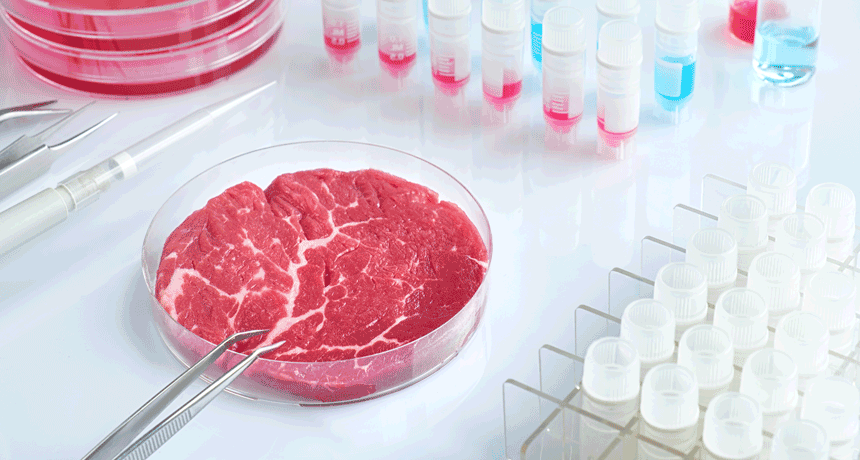
Lab-grown meat is made by growing muscle cells in a nutrient-serum and forming them into muscle-like fibres, mimicking the texture of ‘real’ meat (Ireland, 2019). Satellite cells are obtained from a small sample of muscle taken from a live animal. These can then be turned into the different cells found in muscle which are then duplicated within a nutrient serum. One cell could in theory be used to grow infinite meat, radically reducing the ethical controversies of meat production and theoretically solving food insecurity.

As explored in my last blog post ‘home’, food is made tasty by reproducing biographies and memories through the sensory experience of eating it. To make successful products, the artificial meat industry must recreate this familiar ‘taste-texture-aroma’. By making the meat culturally familiar, production companies can make the food ‘good to think’ with. The technical processes of achieving this seem to be fairly easy for researchers to achieve as they are able to manipulate the chemicals in order to achieve good flavour (Cadwalladr, 2014). Upon comments by critics on the dryness of an early sample burger, cultured meat companies began working on culturing fat cells and tissues from cows to mix with the muscle fibres.

Laboratory-grown meat using tissue engineering techniques could generate up to 97% lower greenhouse gas emissions: requiring radically less water and land area to create, reducing transportation, and producing less waste products (Ox.ac.uk, 2011). Artificial meat is “meat without the murder” (Cadwalladr, 2014) . However, the question remains of whether people would eat it? In a survey conducted by The Guardian, 69% of people were willing to eat meat grown in a lab (The Guardian, 2013).

This is the texture and appearance that researcher hope to create (Science News for Students, 2019)

The development of artificially grown meat is as much a philosophical hurdle as it is a technological one (Cadwalladr, 2014). People find it hard to imagine that the meat-like product of a laboratory could be as delicious as an actual animal. Many people balance between the gut-feeling of object to it and the rational acceptance that the product may be ethically, environmentally, and economically right. This has been deemed as the ‘yuck factor’ (George, 2012). Perhaps this is the ‘uncanny valley’ : that as artificial meat appears more meat-like, it will become more appealing, but once it’s resemblance passes a certain point it will elicit revulsion.

It is these cultural, philosophical, and ethical biases which elicit inherent repulsion from many people. The idea of food being ‘good’ is embedded within cultural traditions of what tastes good and what is culturally accepted. On the other hand, production companies are also using and manipulating these biases to help sell their products. By presenting the meat as both ‘good to eat’ (as it mimics the exact taste-texture-aroma of meat) and ‘good to think’ with (as it is ethically superior), will these research laboratories be able to produce ‘good’ food? (Lévi-Strauss, 1991). After all, when analysed under a microscope, artificial meat will look exactly the same as traditional meat (Cadwalladr, 2014). Scientists are working to ensure that it looks, tastes and smells exactly like the ‘real thing’. So, when lab-grown meat becomes a real choice on our supermarket shelves, how are people going to justify refusing to eat it?

As Jimmy from Attwood’s novel argued: “as with the tit implants– the good ones– maybe he wouldn’t be able to tell the difference” (Atwood, 2003).

Bibliography

Atwood, Margret. (2003). Oryx and Crake. New York: Anchor.

Bentham, Jeremy (1823) An Introduction to the Principles of Morals and Legislation. London: W. Pickering.

Bentham, Jeremy (1843) Anarchical fallacies: Being an examination of the declarations of rights issued during the french revolution. In: Bowring J., editor. The Works of Jeremy Bentham. London: William Tate.

Cadwalladr, Carole (2014). Laboratory-grown beef: meat without the murder, but would you eat it?. [online] The Guardian. Available at: https://www.theguardian.com/science/2014/jul/13/laboratory-grown-beef-meat-without-murder-hunger-climate-change [Accessed 25 Feb. 2020].

Descartes, René., (1984) The Philosophical Writings of Descartes. Cambridge: Cambridge University Press.

Franco, Nuno Henrique (2013) Animal Experiments in Biomedical Research: A Historical Perspective. Animals : an open access journal from MDPI 3(1) 238-73 doi:10.3390/ani3010238

Geneticsandliterature.files.wordpress.com. (2012). [image] ChickieNobs vs. God’s Gardeners: Meat Production and Consumption. Available at: https://geneticsandliterature.files.wordpress.com/2012/03/engl-243-chickienob1.jpg?w=584 [Accessed 25 Feb. 2020].

George, Alison. (2012). The yuck factor: The surprising power of disgust. [online] New Scientist. Available at: https://www.newscientist.com/article/mg21528731-800-the-yuck-factor-the-surprising-power-of-disgust/ [Accessed 25 Feb. 2020].

Ireland, Tom. (2019). The artificial meat factory – the science of your synthetic supper. [online] BBC Science Focus Magazine. Available at: https://www.sciencefocus.com/future-technology/the-artificial-meat-factory-the-science-of-your-synthetic-supper/ [Accessed 25 Feb. 2020].

Lévi-Strauss, C. (1991) Totemism. London: Merlin Press.

Mori, Masohiro; MacDorman, Karl F.; Kageki, Norri (2012) The Uncanny Valley [From the Field], IEEE Robotics & Automation Magazine, 19 (2):98-100.

Ox.ac.uk. (2011). Lab-grown meat would ‘cut emissions and save energy’ | University of Oxford. [online] Available at: http://www.ox.ac.uk/news/2011-06-21-lab-grown-meat-would-cut-emissions-and-save-energy# [Accessed 25 Feb. 2020].

RSPCA (n.d.). Laying hens – key welfare issues [image] Available at: https://www.rspca.org.uk/adviceandwelfare/farm/layinghens/keyissues [Accessed 25 Feb. 2020]

Science News for Students (2019). [image] Available at: https://www.sciencenewsforstudents.org/article/new-spin-lab-grown-meat [Accessed 25 Feb. 2020].

Scott, Ellen. (2019). Greggs vegan sausage roll ingredients and how many calories is it? | Metro News. [online] Metro.co.uk. Available at: https://metro.co.uk/2019/01/03/actually-greggs-vegan-sausage-roll-8305542/ [Accessed 25 Feb. 2020].

The Guardian. (2013). Would you eat lab-grown meat?. [online] Available at: https://www.theguardian.com/science/poll/2013/aug/05/stem-cells-meat-industry [Accessed 25 Feb. 2020].

The Independent (2019). [image] Available at: https://www.independent.co.uk/life-style/food-and-drink/greggs-vegan-sausage-roll-review-cronut-a9194651.html [Accessed 25 Feb. 2020].

Home

Today, I ate salmon dipped in melted chocolate. Sounds disgusting? Well it was. This combination went against everything I would have ever expected to pair with fish. I prefer my salmon steamed with broccoli and new potatoes and some tartar sauce, a dish that my family eat together on Fridays nights.

However, according to an AI computer programme designed to pair food according to their molecular compositions, chocolate and fish were a match made in heaven (The Scientist Magazine, 2012).

This made me think: how is food made tasty? Is it through the correct combination of ingredients which complement each other due to their chemical constitution, or is it through the amalgamation of ingredients which trigger specific emotional associations and memories?

I want to understand whether tastiness is just an experience of the body (one which generates sensations of satiation and perceptions of spice, sweetness and acidity) or whether it is also an experience of the mind which can trigger memories and emotions as well as create associations and build communities.

Hong Kong is home to many restaurants offering tastes of authentic Filipino food (theloophk, 2018)

Food is a type of portable culture that can remake a home through sensory experiences (Highmore, 2009). An ethnography from Hong Kong really exemplifies this point. Female Filipino migrants working as domestic workers living in Hong Kong become embodied subjects in the city through actively creating spaces that emulate the sensory experience of ‘home’ (Law, 2001). ‘Little Manila’ is an area of Hong Kong where Filipino women gather on Sundays to castoff the conventions of their Chinese employers. The consumption of traditional Filipino food evokes a familiar sense of taste-texture-aroma which helps emulates this sense of ‘home’. Good food creates a community identity and can bring its members together through shared sensory experiences. Everyday experiences such as food can become a performative politics of ethnic identity which articulate place. This is directly related to issues of power relations within the workplace where domestic workers are often banned from cooking their traditional food by their Chinese employers who associate it with ‘bad odours’ and negative ethnic stereotypes. These sensory connections directly affect different communities’ perceptions of food. Little Manila is a space which allows domestic workers to temporarily disrupt and resist their position within employer/employee hierarchies. The dominant visuals of Hong Kong are disrupted using olfactory and aesthetic politics which constitute situated practices that connect the body to power relations within the space of the city. By using sights, sounds, and aromas, women become embedded in the city by producing their own urban culture, defining their own social worlds, and resisting their roles as domestic workers.

This ethnography shows how both our sensory and mental culinary encounters shape our experiences of food. The specific tastes, smells and textures embody specific memories and associations. Chinese employers and Filipino domestic workers interpret the smells of Filipino cuisine differently. Therefore, whilst it cannot be denied that taste plays a huge role in judging what food we find tasty, our culture and memories are also important in shaping this subjective category.

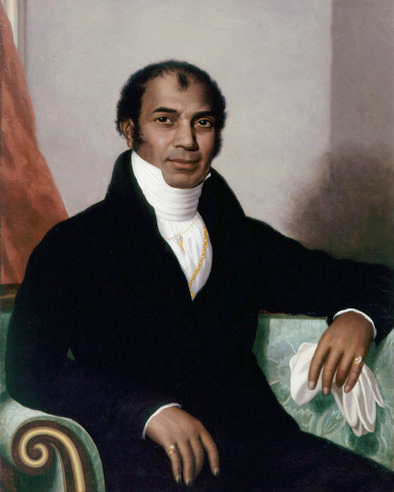
Portrait of Sake Dean Mahomed,  a former captain in the British East India Company’s Bombay Army and the owner of the Hindostanee Coffee-House established 1810 (Mann Baynes, c.1810)

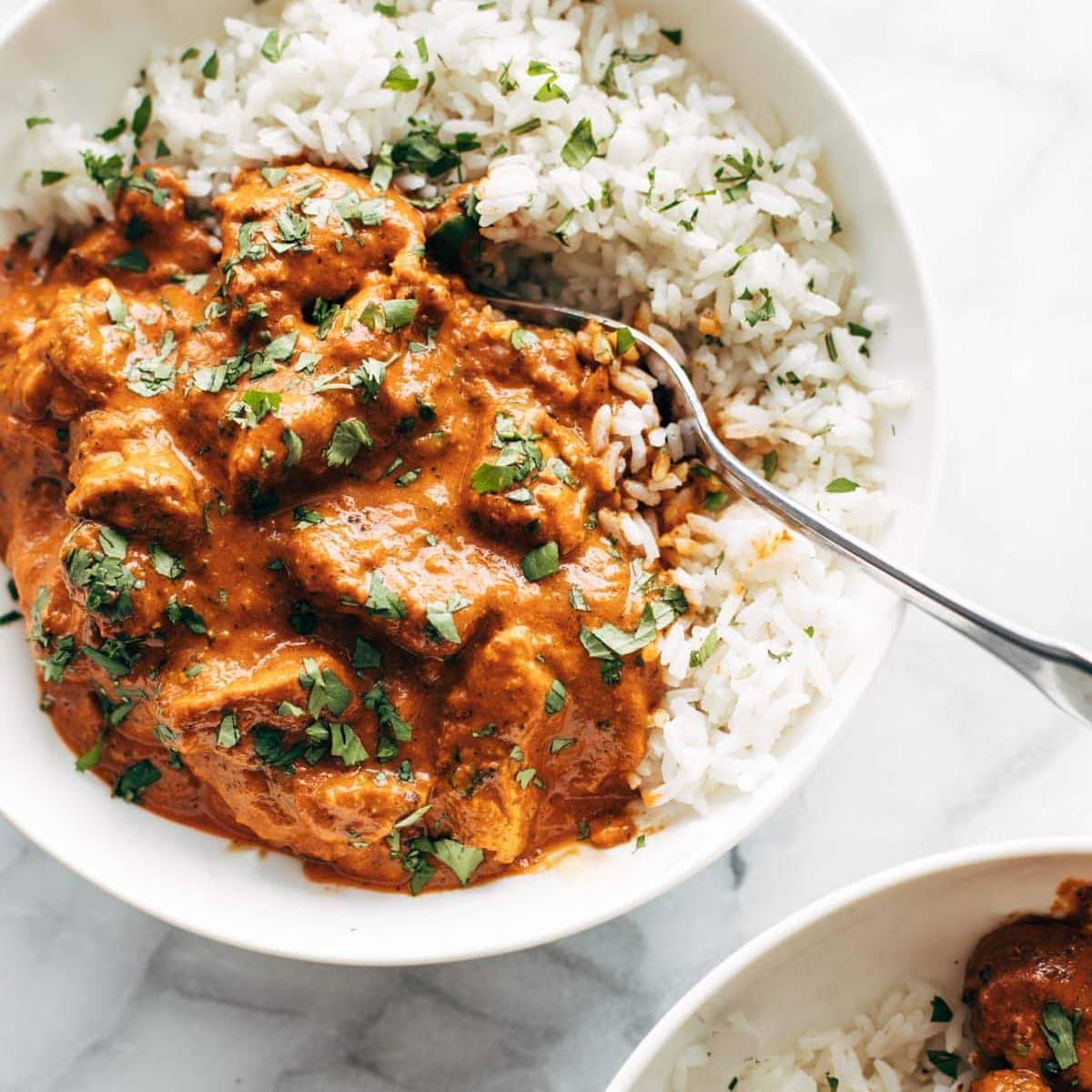
All food has a history and a biography. By tracing these it is possible to understand how their specific histories affect the palette. Indian cuisine is diasporic popular culture as it was originally a locally constituted practice but through historical flows of people, goods and ideas, it has been spread globally (Highmore, 2009). The first curry house in Britain, Hindostanee Coffee-House, was designed to encouraged white people to experience a constructed Indian imperialistic culture. The taste and smell of the food was design to connect to the visual décor of the restaurant including paintings of Indian landscapes, as well as the sound and touch of creaking bamboo furniture. The theatrical nature of these restaurants made them a success and there was a huge growth of Indian restaurants in Britain. Thus, the experience of a food culture is strongly associated with a range of sensual experiences. This example shows the continuity and discontinuity of cultural presence and cultural heritage. Diasporic culture can be contradictory as it is both artificial whilst simultaneously being authentic. The British ‘Chicken Tikka Masala’, famously one of Britain’s favourite dishes, occupies a third space which is neither British nor Indian. The power of food to form such strong associations with articular geographies, histories and communities shows its importance in producing sense-place connections and emulate senses of ‘home’.

Chicken Tikka Masala has often been hailed ‘Britain’s Favourite Curry’ (Wikipedia.org, n.d.)

These examples show how food provides nourishment and triggers positive sensory experiences. Reading and writing about Filipino stews and Indian curries has definitely made me hungry. However, the sensory experience of food is also generates memories, communities and group identities.

I find it interesting to apply these examples to classic anthropological theory. Let’s consider Lévi-Strauss’s famous statement that: “natural species are chosen not because they are “good to eat” but because they are “good to think”” (Lévi-Strauss, 1991, p. 89). This is in reference to totems however, it seems to also resonate with the theme of food. Totemic systems divide societies into clans which are each associated with a particular totem or animal ancestor (Barnard & Spencer, 2010). Early anthropological analyses of these systems linked these totems with food taboos. Lévi-Strauss however argued that people can be named after species without feeling guilt for eating them (Lévi-Strauss, 1991). The principles of totemism are used to identify one’s kin and these natural distinctions serve as useful models for social ones. Thus, totems are not ‘good to eat’ but rather ‘good to think’.

Whilst food is ‘good to eat’ it is also ‘good to think’ as eating specific foods creates situated practices which embody actors within communities and group identities. Therefore, one way food is made tasty is by sparking its ability to be ‘good to think’ by making the sensory experience of eating it reproduce biographies, histories, memories and home.

Bibliography

Barnard, A. & Spencer, J., 2002. Encyclopaedia of Social and Cultural Anthropology. London: Routledge.

Highmore, B. (2009) The Taj Mahal in the High Street, Food, Culture & Society, 12:2, pp.173-190.

Law, L. (2001) Home Cooking: Filipino Women and Geographies of the Senses in Hong Kong. Ecumene 8(3): 264-283.

Lévi-Strauss, C. (1991) Totemism. London: Merlin Press.

Mann Baynes, T. (c. 1810) Sake Deen Mahomed [Oil on canvas] Royal Pavilion & Museums, Brighton & Hove.

The Scientist Magazine. (2012). Chocolate and Cheese. Available at: https://www.the-scientist.com/notebook/chocolate-and-cheese-40244 [Accessed 10 Feb. 2020].

The Loop HK. (2018). Where to Eat Filipino Food in Hong Kong. [Online] Available at: https://www.theloophk.com/where-to-eat-filipino-food-in-hong-kong/ [Accessed 10 Feb. 2020].

Wikipedia.org. (n.d.) Chicken Tikka Masala. [online] Available at: <https://en.wikipedia.org/wiki/Chicken_tikka_masala&gt; [Accessed 26 March 2020].

Design a site like this with WordPress.com
Get started