Note: Within this blog post I use terms such as ‘non-normative bodies’, or people with disabilities- intellectual or physical in accordance with advice given by the NDA (National Disability Authority, n.d.). By using these terms, I aim to reflect the individuality, equality and dignity of people with disabilities. However, I also acknowledge that not all disabilities or people are the same and the ideas expressed here may not be accurate for all people or all disabilities.
It has been argued that the body is the grounding point through which we experience the world (Scheper-Hughes & Lock, 1987). Our relationship to the world is therefore constructed through our perception and the senses. The fields of sensory anthropology and the anthropology of the senses each acknowledge the importance of senses by using them as an object of analysis and a focus for ethnographic research (Pink & Howes, 2010). This presents a way of contextualising anthropology from within the body.
It has often been assumed that our senses are objective and natural. However, as everything is subject to social conditioning, the sensing body has also been conceptualized as being a cultural construction and socio-cultural sensation (Howes & Classen, 2013). Each sociality dictates its own normative forms and normative sensory experiences. The way a society understands sense is inseparable from what a society thinks sense symbolises (Ingold, 2000). This new approach draws into question how this perceived hegemony of specific senses affects people in these societies who may not adhere to the normative sensory experiences.
As discussed in previous blog posts, food is an important way that people are brought together, identities are expressed, cultures are bridged, and new social relations are formed. However, since sociality revolves so much around food, what happens to those who do not have access to those situations? And since food relies so heavily on sensory experiences, how is food made accessible to people who do not experience these senses in the ‘normative’ way? Social and environmental barriers affect what someone might eat and where, when and with whom they might eat it. In this post I want to explore several ways that food interacts with the lived experiences of people with non-normative bodies who may have different experiences of the world.
What we eat, where we eat, how we eat and who we eat with are inextricably linked to both our personal and cultural identities. In the West, there has been a huge rise in food pop-culture including food television such as reality shows, instructional programmes, and kitchen renovations; celebrity chefs; cookbooks; magazines; kitchen technology; and viral social media trends (Gerber, 2007). A proliferation of gourmet farmer’s markets, famous restaurants, and street food stalls has increased the popularity and values of certain food products such as special cuts of meats, exotic fruits and vegetables, and speciality cheeses.
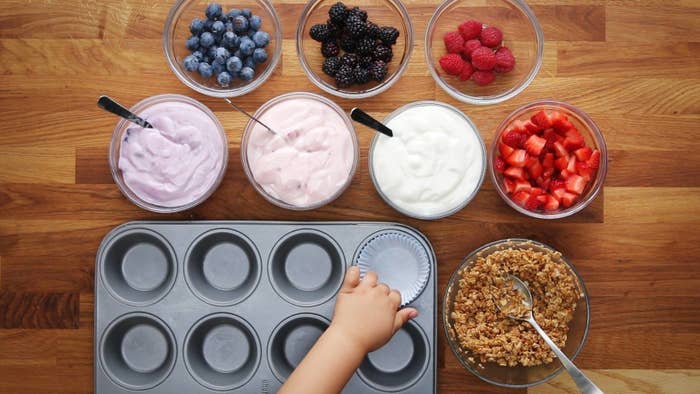
The rapid increase in representational food media has opened up new windows for more diverse audiences to learn about food and master new cooking techniques. Take for example one of my favourite food media producers, Buzzfeed’s ‘Tasty’. Spanning many social media platforms, their videos take many forms including instructional cooking tutorials, wacky food challenges, and travel videos. With 36.4m followers and over 4,000 posts, their most popular platform is their Instagram account (Tasty @Buzzfeedtasty, 2020). The majority of their posts consist of short, one-minute videos which show recipes being made from a ‘birds-eye-view’ so that the viewer only sees the hands of the chef. These videos are accompanied by up-beat music. Popular, highly instructive, and also addictive to watch, but they are completely useless for someone who is blind or otherwise visually impaired. As it has been put by George Stern: “since neither video is narrated or accompanied by a transcript; it’s jaunty music all the way through and, for all I know, dragons doing the anaconda.” (Stern, 2019). This is the experience of many non-normative cooks with many types of food media pop-culture. They often do not acknowledge the obstacles that cooks with non-normative bodies may face in the kitchen.
For example, I had never considered the feelings of frustration that a common simple phrase such as ‘bake until golden brown’ could bring to some cooks.
Cooking is such a phenomenological experience. One of my cooking sounds is the hollow noise made when tapping the base of freshly baked bread. Why should we limit cooking media to being uni-sensory when media could be enriched through multisensory descriptions and also diversify their audience?

Daniel Gritzer’s article on how to fillet sardines provides an excellent example of how food writers can achieve multisensory cues in their writing (Gritzer, 2018). This article provides high quality, clear photographs accompanied by captions for every step of the process. When selecting your sardines he recommends looking for bright, silvery skin; feeling for firm flesh; looking and feeling for bruises or smashed spots on the skin and belly; looking and feeling for clear, plump eyes; and smelling for a fresh oily scent as opposed to “bad” fishy smell. These instructions provide simple, clear instructions which build the confidence and skills of all chefs- regardless of their sensory range.
Food media should include providing transcripts to accompany videos that demonstrate techniques, providing alternative text for photographs alongside captions with informative descriptions (Stern, 2019). To ensure that cooks with disabilities can engage with food media and feel valued as audience members, authors must think critically about accessibility.
So why should society be so concerned about making food media accessible? Food and eating are inextricably linked to power, this needs to be analysed in order to ensure that non-normative bodies have access to considerate food media, adequate support, adapted kitchens, and good food (Gerber, 2007).
It is generally believed that people with disabilities are less able to cook (Blatnik, 2013). For example, the RNIB (Royal National Institute of Blind People) claim that children with vision impairment are often discouraged from spending time in the kitchen as it is deemed dangerous (RNIB, 2017).
However, this goes beyond just sensory differences. Not all disabilities or people are the same however I will detail some common issues that may pose barriers to some people from entering the kitchen. Physical disabilities, even those that are temporary, may interfere with cooking (Katz, 2018). For example, not having mobility of both limbs may slow down the cooking process due to the difficulties of chopping with a non-dominant hand, or opening food packets. Chronic illnesses may also add extra barriers to cooking, for example someone on chemotherapy may find the smells of cooking trigger nausea or dizziness, or someone with lupus may experience rashes when exposed to the heat of the kitchen. Intellectual disabilities may also pose challenges to cooking triggering a range of symptoms such as fatigue, headaches, panics or sensory sensitivities, depending on the individual.
Furthermore, in the West, control over food consumption and the ability to cook and feed oneself is highly related to notions of independence and adulthood (Lance, 2007). Not having control over food intake is a very real experience of those with non-normative bodies in the West.
Note: The notion of “eating as independence” is far from being a ‘social fact’ (Mauss, 1954). This is a culturally variable practice which varies depending on place and context (Gerber, 2007). For example, in Ethiopia, feeding one another is seen to reinforce social relations and intimacy (Lance, 2007). Even within Western contexts this differs as feeding a significant other may also generate and reflect intimacy.
People with disabilities are more vulnerable to being overweight, obese, and sedentary and suffering associated health consequences (Weil et al., 2002). Having inadequate cooking resources, education, or skills may markedly influence dietary intake and consequently weight status (Blatnik et al., 2013). Revised public health and policy solutions are needed to address some of these issues which may be correlated with high rates of food insecurity among those with disabilities. Solutions could include promotion of cookery education; greater availability of healthy foods; increased financial aid; support workers educated in cooking and teaching; and better adapting kitchens. By encouraging accessible media resources, and publishing multi-sensory recipes, the media can also play a role in addressing these barriers. Case studies such as Christine Hà (first blind contestant of MasterChef and the winner of its third season in 2012), Hugs and Mugs café in Illinois (run completely with adults with Downs syndrome), and the growing array of cookbooks and online resources catered towards chefs with non-normative bodies, provide inspiring examples of ways that the kitchen can become accessible for all.
Bibliography
Bake with Jack (2017) 19: How can I tell if my bread is fully baked? That “Hollow” Sound – Bake with Jack. Available at: https://www.youtube.com/watch?v=6tsrv91F_tk [Accessed 10 March 2020]
b0kuwahmz (2012) Chistine’s Apple Pie | MasterChef US. Available at: https://www.youtube.com/watch?v=WIGXboHpge0 [Accessed 10 March 2020]
Blatnik, Stanko; Blatnik, Mladen; Selimovic, Sanja; Mujezinovic, Amelia; Saric, Edina (2013) Teaching People with Disabilities to Cook. Journal of Educational and Instructional Studies in the World 3(2): 43-48.
Gerber, Elaine (2007) Food Studies & Disability Studies: Introducing A Happy Marriage. Disability Studies Quarterly 27(3).
Gritzer, David (2018) How to Clean and Fillet Fresh Sardines. [Blog] Serious Eats, Available at: <https://www.seriouseats.com/2018/04/how-to-clean-and-fillet-fresh-sardines.html> [Accessed 10 March 2020].
Ingold, Tim (2000) “Stop, look and listen! Vision, hearing and human movement” In The Perception of the Environment: Essays on Livelihood, Dwelling and Skill: 243-287.
Katz, Jonathan (2018). What Does Disability Have To Do With Cooking?. [Blog] Flavors of Diaspora, Available at: <https://flavorsofdiaspora.com/2018/02/23/what-does-disability-have-to-do-with-cooking/> [Accessed 10 March 2020].
Lance, Denise, G. (2007) Do the Hands that Feed Us Hold Us Back?: Implications of Assisted Eating. Disability Studies Quarterly 27(3).
Mauss, Marcel (1954). The Gift forms and functions of exchange in archaic societies. Glencoe, IL: Free Press.
National Disability Authority (n.d). Appropriate Terms To Use | The National Disability Authority. [online] Available at: <http://nda.ie/Publications/Attitudes/Appropriate-Terms-to-Use-about-Disability/> [Accessed 10 March 2020]
Pink, Sarah (2009) Doing Sensory Ethnography. Sage Publications LTD: London.
Pink, Sarah & Howes, David (2010) The future of sensory anthropology/the anthropology of the senses. Social Anthropology 18(3): 331-333.
RNIB (2017) Kitchen Curriculum For Children With Vision Impairment. [online] Available at: <https://www.rnib.org.uk/insight-online/kitchen-curriculum-children-vision-impairment> [Accessed 10 March 2020].
Scheper‐Hughes, Nancy & Lock, Margaret M. (1987) The mindful body: A prolegomenon to future work in medical anthropology, Medical anthropology quarterly 1(1): 6-41.
Stern, George (2019) How Cooking Websites Are Failing People With Disabilities. [Blog] Serious Eats, Available at: <https://www.seriouseats.com/2019/07/cooking-websites-and-accessibility-for-disabled-readers.html> [Accessed 10 March 2020].
Tasty (@Buzzfeedtasty) (2020). Instagram.com. [online] Available at: <https://www.instagram.com/buzzfeedtasty/?hl=en> [Accessed 10 March 2020].
Weil, Evette; Wachterman, Melissa; McCarthy, Ellen P.; Davis, Roger B.; O’Day, Bonnie; Iezzoni, Lisa I.; Wee, Christina C. (2002) Obesity among adults with disabling conditions. JAMA 288(10):1265–1268.
 Food for Thought