Today, I ate salmon dipped in melted chocolate. Sounds disgusting? Well it was. This combination went against everything I would have ever expected to pair with fish. I prefer my salmon steamed with broccoli and new potatoes and some tartar sauce, a dish that my family eat together on Fridays nights.
However, according to an AI computer programme designed to pair food according to their molecular compositions, chocolate and fish were a match made in heaven (The Scientist Magazine, 2012).
This made me think: how is food made tasty? Is it through the correct combination of ingredients which complement each other due to their chemical constitution, or is it through the amalgamation of ingredients which trigger specific emotional associations and memories?
I want to understand whether tastiness is just an experience of the body (one which generates sensations of satiation and perceptions of spice, sweetness and acidity) or whether it is also an experience of the mind which can trigger memories and emotions as well as create associations and build communities.

Food is a type of portable culture that can remake a home through sensory experiences (Highmore, 2009). An ethnography from Hong Kong really exemplifies this point. Female Filipino migrants working as domestic workers living in Hong Kong become embodied subjects in the city through actively creating spaces that emulate the sensory experience of ‘home’ (Law, 2001). ‘Little Manila’ is an area of Hong Kong where Filipino women gather on Sundays to castoff the conventions of their Chinese employers. The consumption of traditional Filipino food evokes a familiar sense of taste-texture-aroma which helps emulates this sense of ‘home’. Good food creates a community identity and can bring its members together through shared sensory experiences. Everyday experiences such as food can become a performative politics of ethnic identity which articulate place. This is directly related to issues of power relations within the workplace where domestic workers are often banned from cooking their traditional food by their Chinese employers who associate it with ‘bad odours’ and negative ethnic stereotypes. These sensory connections directly affect different communities’ perceptions of food. Little Manila is a space which allows domestic workers to temporarily disrupt and resist their position within employer/employee hierarchies. The dominant visuals of Hong Kong are disrupted using olfactory and aesthetic politics which constitute situated practices that connect the body to power relations within the space of the city. By using sights, sounds, and aromas, women become embedded in the city by producing their own urban culture, defining their own social worlds, and resisting their roles as domestic workers.
This ethnography shows how both our sensory and mental culinary encounters shape our experiences of food. The specific tastes, smells and textures embody specific memories and associations. Chinese employers and Filipino domestic workers interpret the smells of Filipino cuisine differently. Therefore, whilst it cannot be denied that taste plays a huge role in judging what food we find tasty, our culture and memories are also important in shaping this subjective category.
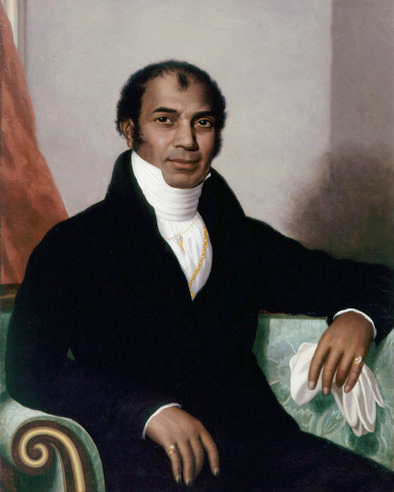
All food has a history and a biography. By tracing these it is possible to understand how their specific histories affect the palette. Indian cuisine is diasporic popular culture as it was originally a locally constituted practice but through historical flows of people, goods and ideas, it has been spread globally (Highmore, 2009). The first curry house in Britain, Hindostanee Coffee-House, was designed to encouraged white people to experience a constructed Indian imperialistic culture. The taste and smell of the food was design to connect to the visual décor of the restaurant including paintings of Indian landscapes, as well as the sound and touch of creaking bamboo furniture. The theatrical nature of these restaurants made them a success and there was a huge growth of Indian restaurants in Britain. Thus, the experience of a food culture is strongly associated with a range of sensual experiences. This example shows the continuity and discontinuity of cultural presence and cultural heritage. Diasporic culture can be contradictory as it is both artificial whilst simultaneously being authentic. The British ‘Chicken Tikka Masala’, famously one of Britain’s favourite dishes, occupies a third space which is neither British nor Indian. The power of food to form such strong associations with articular geographies, histories and communities shows its importance in producing sense-place connections and emulate senses of ‘home’.
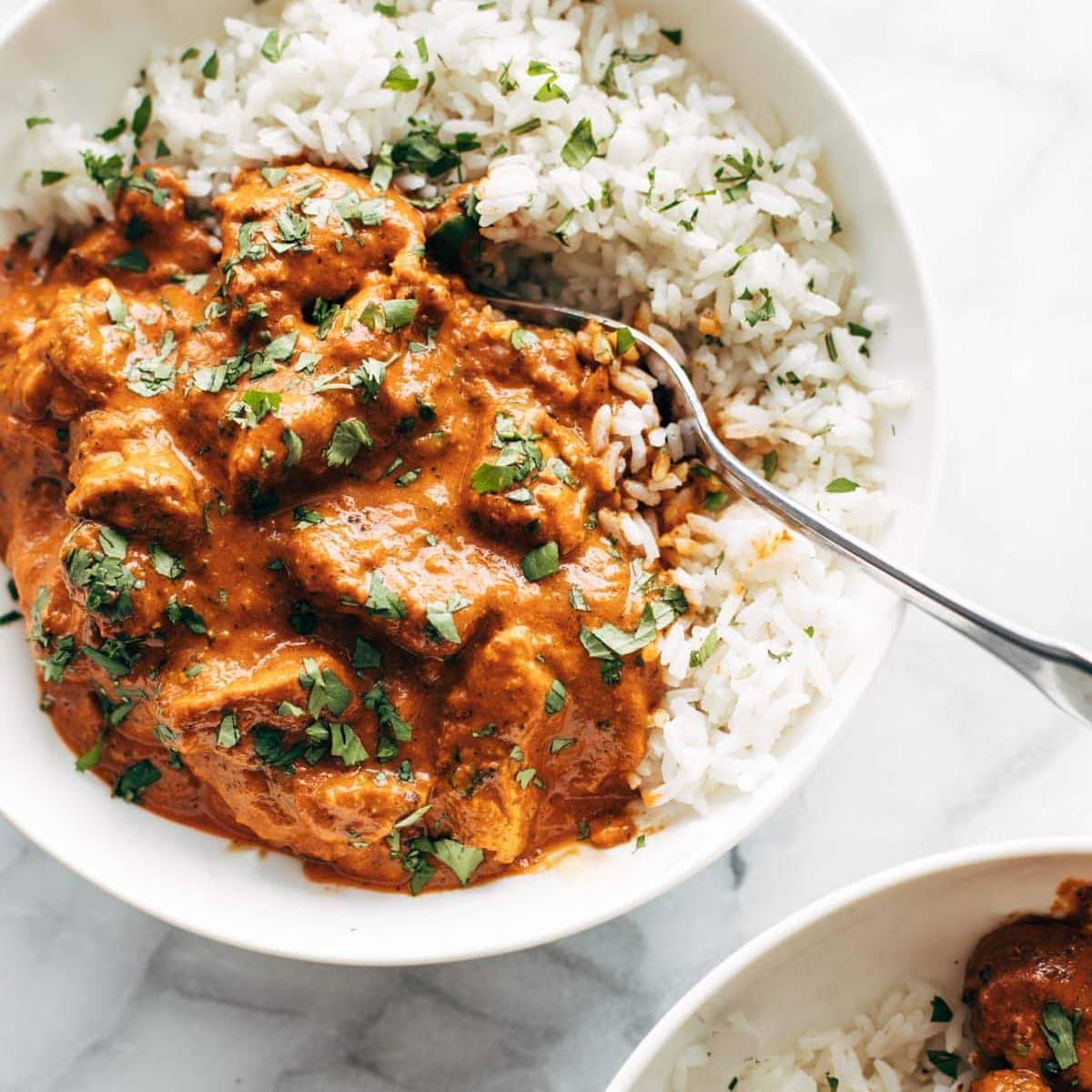
These examples show how food provides nourishment and triggers positive sensory experiences. Reading and writing about Filipino stews and Indian curries has definitely made me hungry. However, the sensory experience of food is also generates memories, communities and group identities.
I find it interesting to apply these examples to classic anthropological theory. Let’s consider Lévi-Strauss’s famous statement that: “natural species are chosen not because they are “good to eat” but because they are “good to think”” (Lévi-Strauss, 1991, p. 89). This is in reference to totems however, it seems to also resonate with the theme of food. Totemic systems divide societies into clans which are each associated with a particular totem or animal ancestor (Barnard & Spencer, 2010). Early anthropological analyses of these systems linked these totems with food taboos. Lévi-Strauss however argued that people can be named after species without feeling guilt for eating them (Lévi-Strauss, 1991). The principles of totemism are used to identify one’s kin and these natural distinctions serve as useful models for social ones. Thus, totems are not ‘good to eat’ but rather ‘good to think’.
Whilst food is ‘good to eat’ it is also ‘good to think’ as eating specific foods creates situated practices which embody actors within communities and group identities. Therefore, one way food is made tasty is by sparking its ability to be ‘good to think’ by making the sensory experience of eating it reproduce biographies, histories, memories and home.
Bibliography
Barnard, A. & Spencer, J., 2002. Encyclopaedia of Social and Cultural Anthropology. London: Routledge.
Highmore, B. (2009) The Taj Mahal in the High Street, Food, Culture & Society, 12:2, pp.173-190.
Law, L. (2001) Home Cooking: Filipino Women and Geographies of the Senses in Hong Kong. Ecumene 8(3): 264-283.
Lévi-Strauss, C. (1991) Totemism. London: Merlin Press.
Mann Baynes, T. (c. 1810) Sake Deen Mahomed [Oil on canvas] Royal Pavilion & Museums, Brighton & Hove.
The Scientist Magazine. (2012). Chocolate and Cheese. Available at: https://www.the-scientist.com/notebook/chocolate-and-cheese-40244 [Accessed 10 Feb. 2020].
The Loop HK. (2018). Where to Eat Filipino Food in Hong Kong. [Online] Available at: https://www.theloophk.com/where-to-eat-filipino-food-in-hong-kong/ [Accessed 10 Feb. 2020].
Wikipedia.org. (n.d.) Chicken Tikka Masala. [online] Available at: <https://en.wikipedia.org/wiki/Chicken_tikka_masala> [Accessed 26 March 2020].
 Food for Thought
Thanks for the interesting blog and musings. Would you have the salmon and chocolate again?!
LikeLike
Thanks for reading! Hmm maybe not… but maybe I should try tuna with nutella next time!!
LikeLike